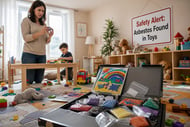
Recent product recalls involving children's toys contaminated with asbestos have raised significant concerns across the UK. More than 120 children's products, including sand art kits, craft sets and toys sold by a number of well-known retailers, have now been withdrawn from sale following safety investigations.
Asbestos is a naturally occurring mineral that was widely used in construction materials until its use was banned in the UK because of its link to serious illnesses including mesothelioma, lung cancer and asbestosis. While the greatest risks are generally associated with occupational exposure, there is no recognised safe level of asbestos exposure.
Why This Recall Matters
The Office for Product Safety and Standards (OPSS) has identified numerous children's products containing trace amounts of asbestos, primarily within sand-based toys and craft kits. The concern is that fibres could become airborne during use, creating an inhalation risk. Consumers have been advised to stop using affected products immediately.
The recalls affect products sold through a range of major retailers, including supermarkets, toy stores and craft retailers. Several manufacturers and importers are understood to have sourced materials from overseas suppliers where contamination may have occurred.
Implications for Schools, Nurseries and Childcare Providers
This issue is not just a concern for parents. Schools, nurseries, after-school clubs and childcare settings should review any craft materials, sand products or educational kits purchased during the affected periods.
Organisations should:
- Check recall notices published by the OPSS.
- Remove any affected products from use immediately.
- Prevent children from accessing recalled items.
- Follow disposal or return instructions issued by the supplier.
- Record actions taken as part of health and safety management procedures.
The recent precautionary closure of two schools in North Tyneside following concerns about potentially contaminated sand demonstrates the importance of taking a cautious approach where asbestos contamination is suspected.
Lessons for Businesses
For retailers, importers and manufacturers, these recalls highlight the importance of robust supply chain due diligence and product safety checks. Businesses importing products from overseas should ensure appropriate testing and quality assurance measures are in place, particularly where products are intended for children.
Under UK product safety legislation, businesses have a duty to ensure products placed on the market are safe and comply with applicable regulations. Failure to identify risks can lead to recalls, reputational damage and potential enforcement action.
What Parents Should Do
Parents who believe they may have purchased one of the affected products should:
- Stop using the product immediately.
- Keep it away from children.
- Follow the recall instructions issued by the retailer or manufacturer.
- Contact the retailer for advice regarding returns or refunds.
If a recalled product has already been opened or used, consumers should follow any specific handling guidance provided by the OPSS or retailer to minimise the risk of disturbing potentially contaminated material.
Final Thoughts
The discovery of asbestos in children's toys is a stark reminder that product safety cannot be taken for granted. Whether you are a parent, school, nursery or retailer, staying informed about product recalls and acting quickly when alerts are issued is essential for protecting health and safety.
Businesses should also use this incident as an opportunity to review supplier assurance processes and product safety controls to reduce the likelihood of similar issues arising in the future.