





Date
28 January 2026Updated
28 January 2026
5 min read

Why Health & Safety Wins or Loses Council Tenders - And How to Get It Right
A Comprehensive Health & Safety Guide for Small Businesses Bidding for Council Contracts
When it comes to tendering for council contracts, small businesses often find themselves navigating through complex paperwork and stringent requirements. One area that will always be scrutinised is your Health & Safety policy and procedures. During peak tender season, this aspect of your bid can make or break your chances of success. Councils are looking for evidence that you can manage risk effectively while providing a safe working environment, not just a well written policy or a pile of paperwork.
In this guide, we will try and break down exactly what councils expect to see when reviewing your Health & Safety submissions, why it matters and how you can move forward without overcomplicating things.
Why Health & Safety is Crucial for Council Tender Evaluations
For councils, ensuring the safety of the public, their employees and contractors is paramount. They have a legal obligation to ensure that any contractors they work with can manage risks appropriately. Your Health & Safety practices are one of the first things they will assess when reviewing a tender. Councils do not want to wade through irrelevant documentation or generic responses; they want confidence that awarding you the contract will not expose them to unnecessary risk.
If your Health & Safety documentation is unclear, overly generic, or not backed up by evidence, you are more likely to get marked down, or your bid could be rejected. However, this does not mean councils are looking for perfect systems. They want to know that you understand the specific risks associated with your work and that you have a clear plan in place to manage those risks effectively.
Health & Safety Policies: What Councils Expect to See
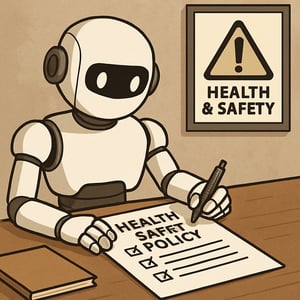
The council typically look for a copy of your Health & Safety policy. This is the cornerstone of your Health & Safety framework and councils expect it to be current, relevant, signed and dated and reflective of your actual operations.
While it is crucial to have a written policy, it should never be a generic, a one-size-fits-all document. Councils will quickly spot a policy that is clearly copied from an internet template, especially if it references tasks or hazards that do not apply to your business.
The Health & Safety Policy Statement of Intent should outline how you manage Health & Safety within your business, not just a list of regulatory requirements. Councils are looking for policies that reflect the reality of your day-to-day operations. Avoid over-complicating the policy; keep it concise, focused, and fit for purpose.
Once your policy is in place, the next thing the councils will expect is evidence that you have assessed specific risks to the work you are bidding for. Risk assessments are where your bid is really put to the test. Councils want to see that you have carefully identified hazards, considered the likelihood and severity of risks and put appropriate controls in place.
Submitting generic, one-size-fits-all risk assessments or blank templates will not be suffice. Councils want task-specific assessments that are tailored to the exact work you will be performing on their behalf. Your risk assessments should reflect the actual tasks and conditions of the project, whether you are working in public spaces, around vulnerable groups, or in high-risk environments.
Alongside your risk assessments, you may also be required to submit method statements. These documents outline how work will be carried out safely and the specific controls in place for each step. Councils are looking for clear, actionable descriptions of the work process, with specific reference to safety measures at each stage.
Demonstrating Legal Compliance in Your Health & Safety Submissions
Compliance is a given, but councils want to see how you comply, not just hear that you do. Many small businesses make the mistake of simply stating that they comply with all relevant Health & Safety legislation. While this is important, it is not enough on its own. Councils need to see how you have integrated the said legal requirements into your operations. Councils appreciate clarity and specifics rather than vague references to legal compliance.
Training and Competence: The Key to Ensuring Safety on the Ground
When bidding for council contracts, demonstrating that your team is competent and well trained is essential. Councils will be looking for clear evidence that your employees have the skills and knowledge required to carry out their tasks safely. Training records should be up to date and relevant to the type of work you will be undertaking.
Do not list generic training courses, focus on training specific to the work. This could include safety inductions, specific technical training, or job-specific certifications, a training matrix is beneficial to have. You should also show evidence of ongoing safety briefings or toolbox talks to ensure that safety remains a priority throughout the duration of the contract.
Reporting Accidents and Managing Incidents
Accident and incident reporting are key components of any Health & Safety system. Councils want to know that if something goes wrong, there is a clear procedure in place for reporting, investigating, and learning from the incident.
A simple “we’ve never had an accident” claim will not inspire confidence. Councils prefer contractors that can show they have a robust reporting system in place for accidents and near misses, as well as procedures for investigating incidents and taking corrective actions. Your ability to learn from incidents and make improvements is a clear indicator of a mature safety culture.
Managing Public and Client Risk
Working with councils often involves interacting with the public, which raises the stakes for public safety. Councils will expect you to identify and manage risks that affect the general public, children, vulnerable adults, or other stakeholders. This may involve assessing the risk of working near public spaces, handling traffic management, or managing crowds.
Your tender submission should clearly address how you will control access to work sites, implement safety measures such as barriers or signage, and ensure that safety is prioritised at all times. The clearer you are about how you will handle public safety risks, the better your chances of securing the contract.
Subcontractors: Managing Health & Safety Responsibilities
If your business uses subcontractors, councils expect you to take responsibility for their Health & Safety as well. They will want to know that you are vetting subcontractors to ensure they meet your standards and comply with relevant Health & Safety Regulations.
Be prepared to show how you monitor subcontractor performance and what checks you undertake to ensure their competence and compliance i.e. sub-contractors pre-qualification questionnaire and approval records. Councils want to see that Health & Safety responsibilities are clearly defined, even when subcontractors are involved.
Proportionate Health & Safety Systems for Small Businesses
One of the most important things to remember when preparing your bid is that councils do not expect small businesses to have the same level of complexity or formality as larger contractors. They understand that small businesses operate differently, and they value proportionate systems that are appropriate for the size and scale of your business.
This means councils may not want to see over-engineered systems or excessive documentation. They want evidence that you have got practical, fit-for-purpose systems in place that are actually used and followed in day-to-day operations.
If your systems are simple, clear, and actionable, you will have a better chance of scoring highly in your tender submission.
How Councils Score Health & Safety Submissions
Councils use pass/fail criteria to assess your Health & Safety submission, which means if your H&S documentation does not meet the basic requirements, your bid could be rejected outright. However, if your submission meets the minimum standards, the assessors will look at how clear, relevant, and evidence-based your responses are.
You are not competing to submit the most complicated or extensive paperwork. You are competing to show that you can manage risks effectively, and that your systems are relevant, practical, and actively used.
Final Thoughts on Preparing Your Health & Safety Submission for Council Tenders
In summary, councils want to see clear, realistic, and practical evidence that you can manage Health & Safety on their behalf. They are not looking for excessive paperwork or theoretical policies; they want proof that you actively manage risks, comply with legal requirements, and are committed to protecting your employees, the public, and the environment.
By providing tailored, evidence-based responses, you will significantly improve your chances of success during peak tender season. Focus on clarity, relevance, and practicality, and you will set yourself up for success.
At Neathouse Partners, we support businesses to win council tenders by strengthening their Health & Safety arrangements. We review and develop policies to a high standard and provide bespoke, tender-specific documentation designed to demonstrate compliance clearly and help you secure those additional evaluation points.